
M1
Mile M1
The west end of the line — Tela, at the pier.
State: OPEN
The World's Largest Beach Cleanup Ever Attempted — Saturday, February 20, 2027
On one day, we aim to clean a continuous line of beach twenty-nine kilometers long — seventeen miles — and weigh every bag. The line is built in seventeen mile-blocks. Bring a team. Take a mile.
You are not joining a shift. You are joining a movement — the $1 Army on its feet — and a total community support project. This is not only a beach cleanup. It is a town beautification process. The chain is plain: cleanup leads to beautification, beautification helps bring tourism, and tourism supports local families with new jobs. That chain is the mission and the direction of this work. On this line, people stand side by side across every background — Black, White, Hispanic, and the Garifuna communities who host this shore — as neighbors in one work. Local families are the owners and the beneficiaries. A volunteer gives hands to a community project, and the community keeps what the work builds.
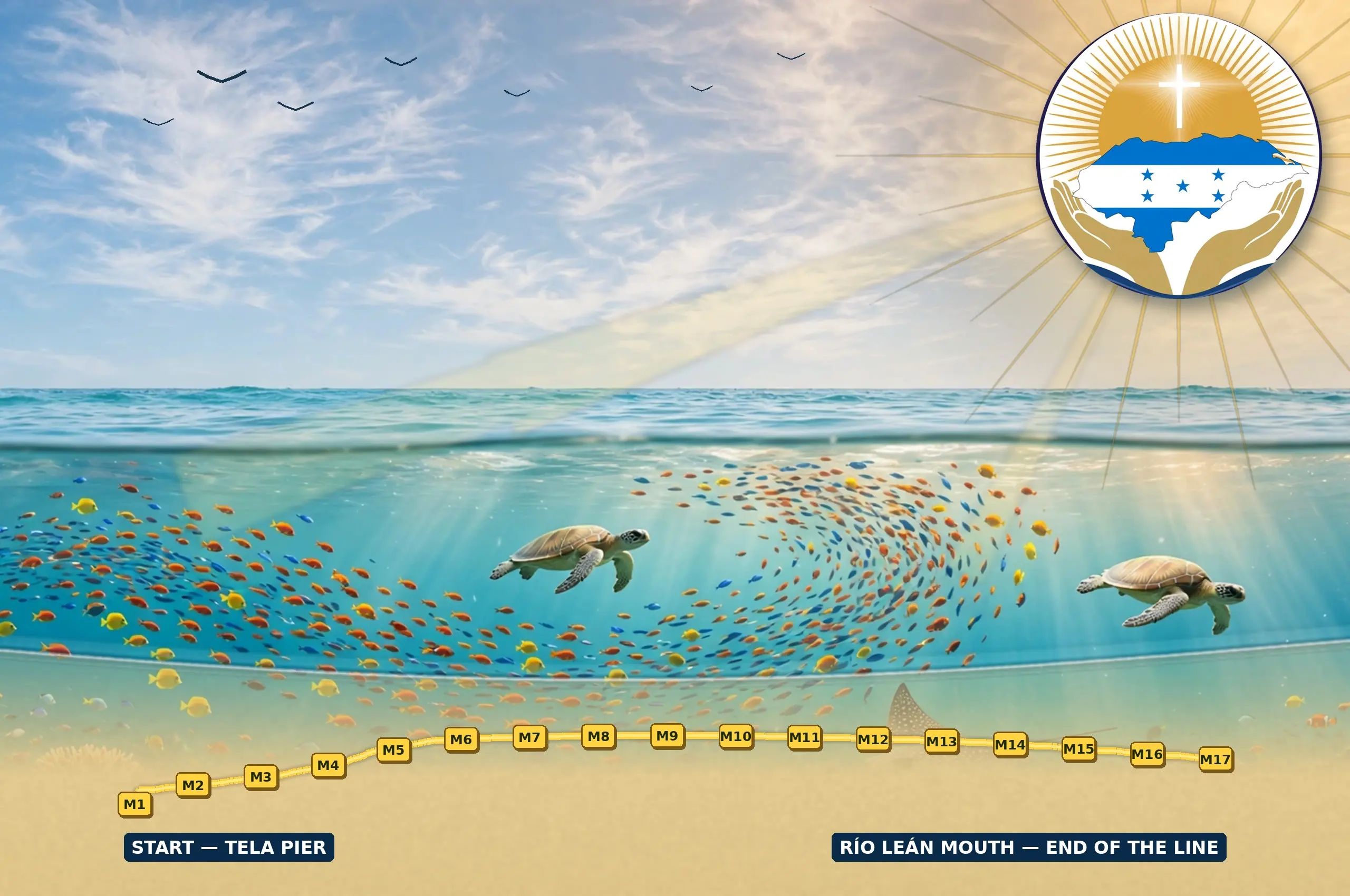
This map is drawn from the line as map-measured from satellite imagery. A November 2026 ground survey walks the line, sets the start pin inside the bay so the measured line is exactly 29 kilometers — seventeen miles — and confirms every mile-block boundary, every mile's start pin, station site, and access point on the ground. Each yellow square on the map marks the start of one team's mile.
Every yellow square on the map is the start of a team's mile. This list is the map in words: each mile, its state, and — once a team is installed — the team that stands on it. Today every mile stands OPEN. Choose yours, then register below: your request shows here as REQUESTED, and when your team's registration is complete, your team is installed — TAKEN, under its name.
OPEN — no team yet · REQUESTED — a team has asked for this mile · TAKEN — a team is installed on this mile.
The west end of the line — Tela, at the pier.
State: OPEN
On the line east of Tela, toward the Río Leán mouth — mile 2 of 17.
State: OPEN
On the line east of Tela, toward the Río Leán mouth — mile 3 of 17.
State: OPEN
On the line east of Tela, toward the Río Leán mouth — mile 4 of 17.
State: OPEN
On the line east of Tela, toward the Río Leán mouth — mile 5 of 17.
State: OPEN
On the line east of Tela, toward the Río Leán mouth — mile 6 of 17.
State: OPEN
On the line east of Tela, toward the Río Leán mouth — mile 7 of 17.
State: OPEN
On the line east of Tela, toward the Río Leán mouth — mile 8 of 17.
State: OPEN
On the line east of Tela, toward the Río Leán mouth — mile 9 of 17.
State: OPEN
On the line east of Tela, toward the Río Leán mouth — mile 10 of 17.
State: OPEN
On the line east of Tela, toward the Río Leán mouth — mile 11 of 17.
State: OPEN
On the line east of Tela, toward the Río Leán mouth — mile 12 of 17.
State: OPEN
On the line east of Tela, toward the Río Leán mouth — mile 13 of 17.
State: OPEN
On the line east of Tela, toward the Río Leán mouth — mile 14 of 17.
State: OPEN
On the line east of Tela, toward the Río Leán mouth — mile 15 of 17.
State: OPEN
On the line east of Tela, toward the Río Leán mouth — mile 16 of 17.
State: OPEN
The east end of the line — the Río Leán mouth.
State: OPEN
The great day is Saturday, February 20, 2027. The dawn First Pass runs first. Weighing runs as the work runs. The count is announced at 12:30 PM from the signed ledger.
The Gathering runs February 15–22, 2027. The week works the course blocks on a daily rhythm. February 20 is the line day inside that week. The full setup stands on February 19.
The week is not only the work. Its shape is: work mornings, heritage and music evenings, kids on the beach throughout. Live music stands in the evenings, all the way through the event. Activities stand lined up for kids on the beaches. The week is a vacation at the same time — visitors come to see how the Garifuna people live. The community leaders are brought in, and the community presents its own heritage like no one has ever seen it. The organization hosts. The heritage is presented by the community itself, never performed by us. The meaning stands in this block, plainly: Whites, Blacks, and Hispanics together — nations together — for one goal, a clean ocean. A volunteer joins that whole week, not a single shift in it.
A team works its mile at the wrack line. The work is cleanup and beautification in the same pass — the first two links of one chain: cleanup, beautification, tourism, jobs. Gloves, water, and shade are provided. The rotation is staggered inside the block, with water and shade breaks, so the line never empties. The sharps discipline stands in one honest line: sharps are handled by crew leads only, in sealed containers.
Line crew. Weigh and logistics. Dive — Segment A, under the PADI protocol. Medical. Media and film. Kitchen and camp. Translation and host. You register by self-declaration; medical and dive placements are confirmed against credentials at confirmation.
Visiting volunteers: tonight, you book your own room and your own flight — and nothing about it is left to guesswork. The travel layer walks the trip step by step: choose your week, pick your flight from the board, pick your hotel from the directory, arrange your ride, and register your team for its mile. The full hotels directory opens inside this application at the Travel field, room by room, without leaving the form. The desk gives you all the directions you need, and helps every registered volunteer with ground transportation — the airport run and movement inside the corridor. Special group rates will be negotiated in person in November — until they land, published rates stand, and no negotiated rate is promised. Community volunteers: register here, or through your segment captain at the named registration points.
Numbered credentials. Twice-daily reconciliation. The published dataset. Registering is not attending. Only credentialed, reconciled participation is counted. The record claims only the reconciled count.
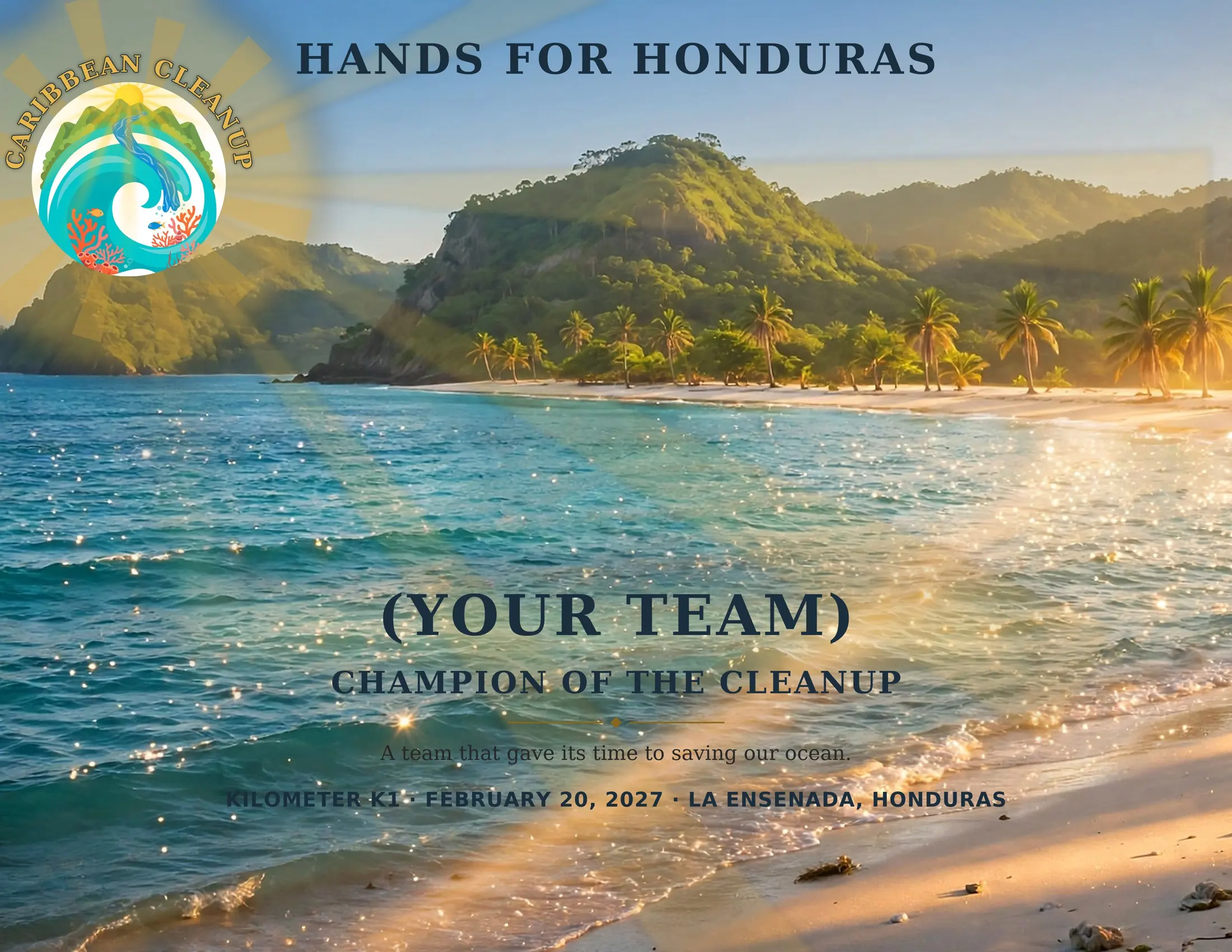
Take a Mile is a competition, and the scale is the judge. Every team's weigh-ins are coded to its mile and rolled up per team across every block it holds. At the celebration on the night of February 20, the winning team is announced in front of the whole group. Every team receives a championship banner for coming and standing on its mile. The winning team receives its banner and the Golden Rake.
When the day ends, this map freezes as the official record of February 20, 2027 — every mile with its team and its weighed kilograms, on a permanent record page that is never taken down. The winning team stands crowned at the top. Every team keeps its own permanent entry to link and share. What your team does that day stays on the record forever.
The whole Fund the Day paper — the poster and the cost sheet, the day at $29,625 to the dollar. Open the full paper (PDF)
The cleanup budget itself — February 20, 2027, line by line, $29,625 to the dollar, with the proof line on the sheet. Open the budget sheet (PDF)
February 20, 2027, hour by hour — the gathering, the dawn First Pass, the weigh-in all day, the count announced at 12:30, the haul-off, and the night celebration. Open the sheet (PDF)
The operation is filmed through the glasses layer, worn by block captains, weigh-station keepers, segment leads, the landfill station receiving lead, and the President. Every registrant makes the film and photo choice for themselves in Field 14 of the application. A volunteer who declines is placed where no filming takes place, without penalty and without comment. No capture is ever directed at a minor.
Below the February map, one quieter band. The Rolling Line stage map stands here, legs filling stage by stage from the published ledgers. The standing registry invitation stands here. Register once. The desk calls you by place and skill when the line reaches your shore.
The Gathering is the opening, not the whole march. Registration offers the Gathering week, February 15–22, 2027 — and later arrival weeks across the Rolling Line’s stages. A volunteer who cannot come in February is routed to a following week on the march, never turned away. The direction of this movement, in the President’s sense: week after week, together, more miles of beach than anybody — stated as the direction we march, and counted only as it is walked and weighed. No mile is claimed before the line has covered it and the scale has said it.
Plan your trip Book your own room
A team registers as a team. The captain registers the team — its name is required, not added later — and requests its mile. The request shows on the map. When the team's registration is complete, the team is installed on the map under its name. Every member then completes their own Part A under the team.
There is no cap on team size and no minimum. The larger the team, the better — this way we can complete our cleanup faster.
A visitor who arrives without a block carries "place me where I am needed" as the standing default. The map is never homework. The chosen block from the map is already in the form when the visitor arrives at it. A volunteer with no team registers the same way, and the desk places them where a mile is short, or with a team that welcomes them.
Part B comes to you by email from the desk, after your registration arrives. Three completion items: 1. The event waiver, signed. 2. Emergency contact — name and phone, held for the event medical leads only. 3. One practical line — optional: anything the desk should know to place you well.
Explicitly not collected, anywhere in this registration: no passport or government ID numbers. No date of birth. No payment information of any kind. No home street address.
Registering a team: the captain registers the team on this same form — the team fields are in Part A — and requests the team's mile. The request shows on the map as REQUESTED. The desk works with the captain directly by email from there. When the team's registration is complete, the team is installed on the map under its name. Each member completes their own Part A.
Every registration and every message to this organization is answered by a person, and the President sees every registration. Your registration number stands at the head of your file from the first email on.
Stand in the Army. One dollar a month puts your name on the same book the kilograms go on.
Volunteering asks for hands, not money. No role, block, credential, or confirmation is ever gated on enlistment. The two books stay in separate columns forever — volunteers registered, and enlistments counted by source in the book.
A donor or a company sponsors one mile block — its bags, water, shade, gloves, and its crew weigh-day costs. The block page board carries the sponsor name, with the sponsor consent to be named. After February 20, the sponsor receives their mile's weighed total from the signed ledger.
The sponsorship rides the Beach Cleanup designation. The block number rides in the gift note. Sponsorship levels: Community $250 · River $1,000 · Reef $2,500 · Ocean $5,000 · Presenting $10,000. Acknowledgment, never advertising.
A sponsorship buys the kit and the acknowledgment. It never buys a promised kilogram figure, a promised crowd, a naming right over the public beach, or any claim in advance. The count belongs to the volunteers and the scale.